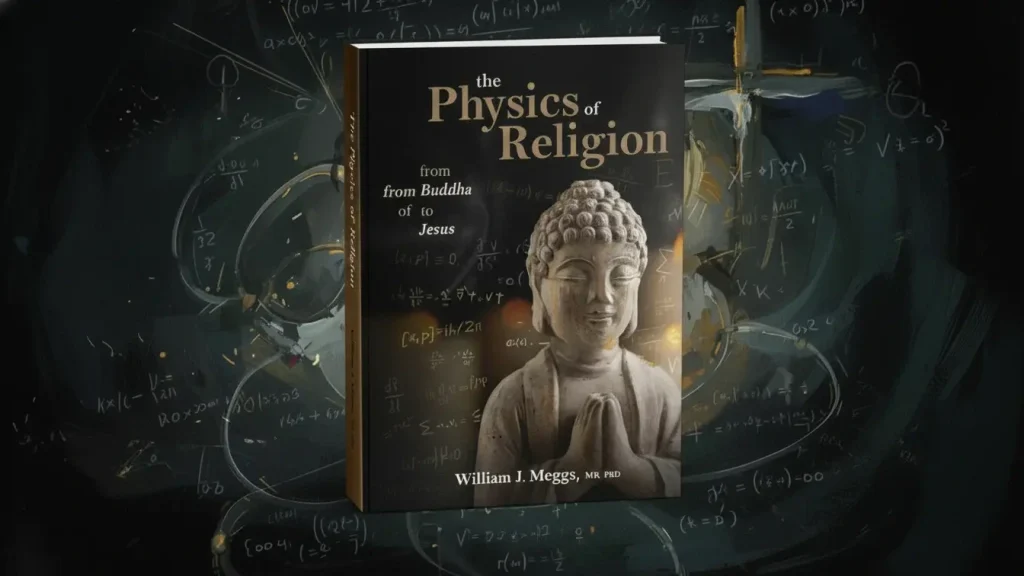
For centuries, the paths of spirituality and science have seemed to diverge. One looks inward through meditation and insight; the other looks outward through experiment and measurement. Yet, a profound dialogue now reveals a resonant harmony between the core tenets of Buddhism and quantum physics. This isn’t about one validating the other. Instead, it involves two powerful systems of understanding one ancient, one modern arriving at strikingly similar conclusions about reality. Moving beyond superficial parallels into a meaningful synthesis requires a reliable guide. For those seeking to understand this convergence, the groundbreaking work of Dr. William Joel Meggs offers an essential map. His comprehensive insights find their fullest expression in his pivotal book.
Buddhism and Quantum Physics: A Dialogue on Reality
At first glance, a 2,500-year-old spiritual tradition and a 20th-century scientific revolution appear to share little common ground. But a deeper exploration uncovers compelling parallels.
The Buddhist Principle of Emptiness
Central to Buddhist philosophy is the concept of Śūnyatā, or emptiness. This does not mean nothingness. It signifies the lack of inherent, independent existence. A tree, a thought, or the self is not a solid, separate entity. Each is a temporary, interdependent event a dynamic pattern arising from a vast web of causes and conditions. Its reality is relational, not absolute.
The Quantum View of Interconnection
Quantum physics echoes this view in its exploration of the subatomic realm. The solid, predictable world we experience dissolves into a realm of probability waves and potentialities. A quantum particle does not exist in one definite state until an observation collapses its possibilities. Furthermore, quantum entanglement reveals a universe where particles connect instantaneously across vast distances. This challenges our classical notions of separation and locality.
Both frameworks deconstruct our intuition of a universe built from distinct, isolated objects. Together, they point toward a reality that is deeply interconnected, participatory, and fundamentally fluid.
The Physics of Religion: From Buddha to Jesus
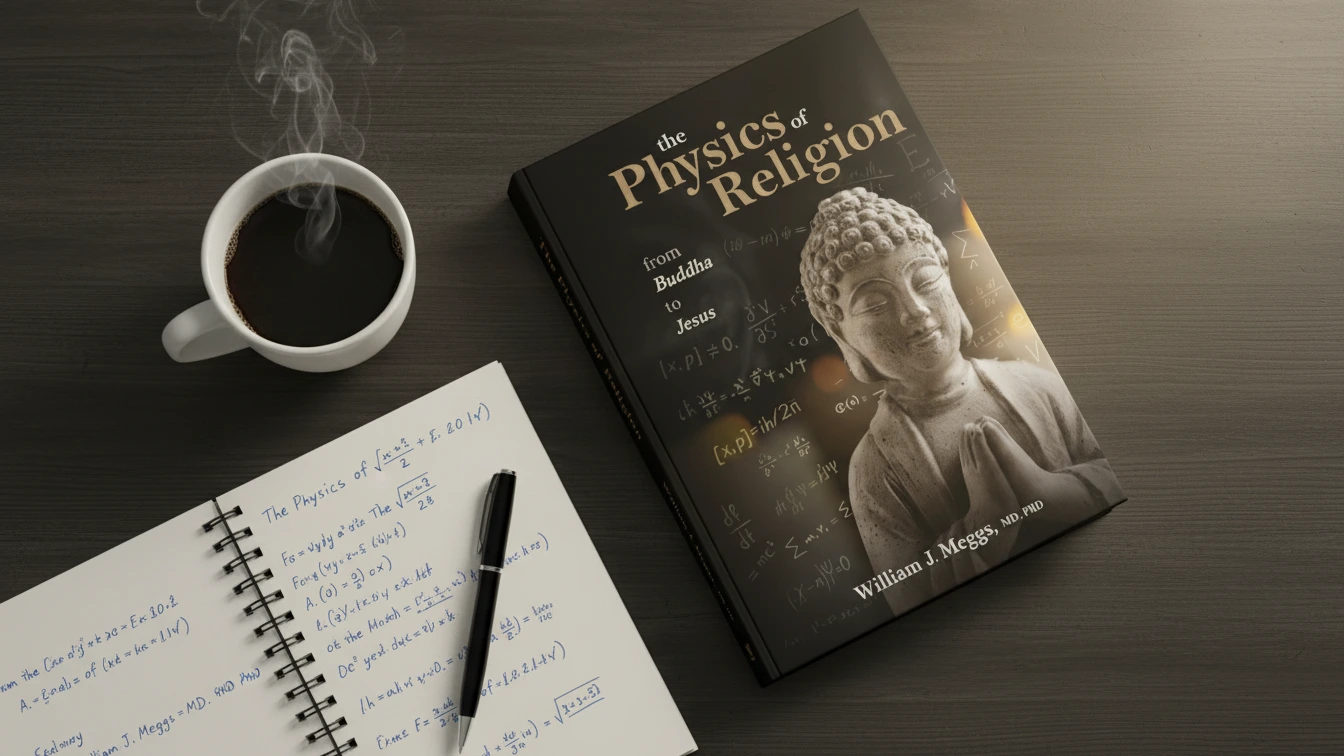
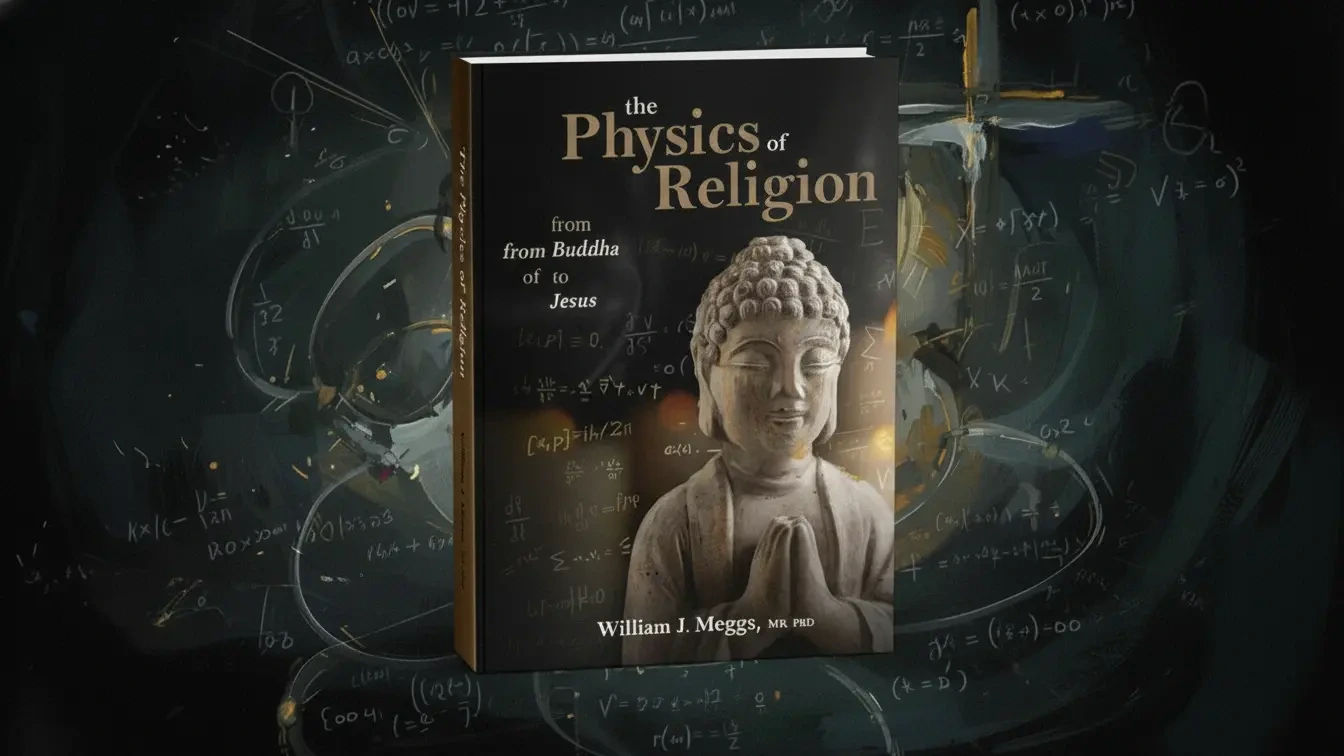
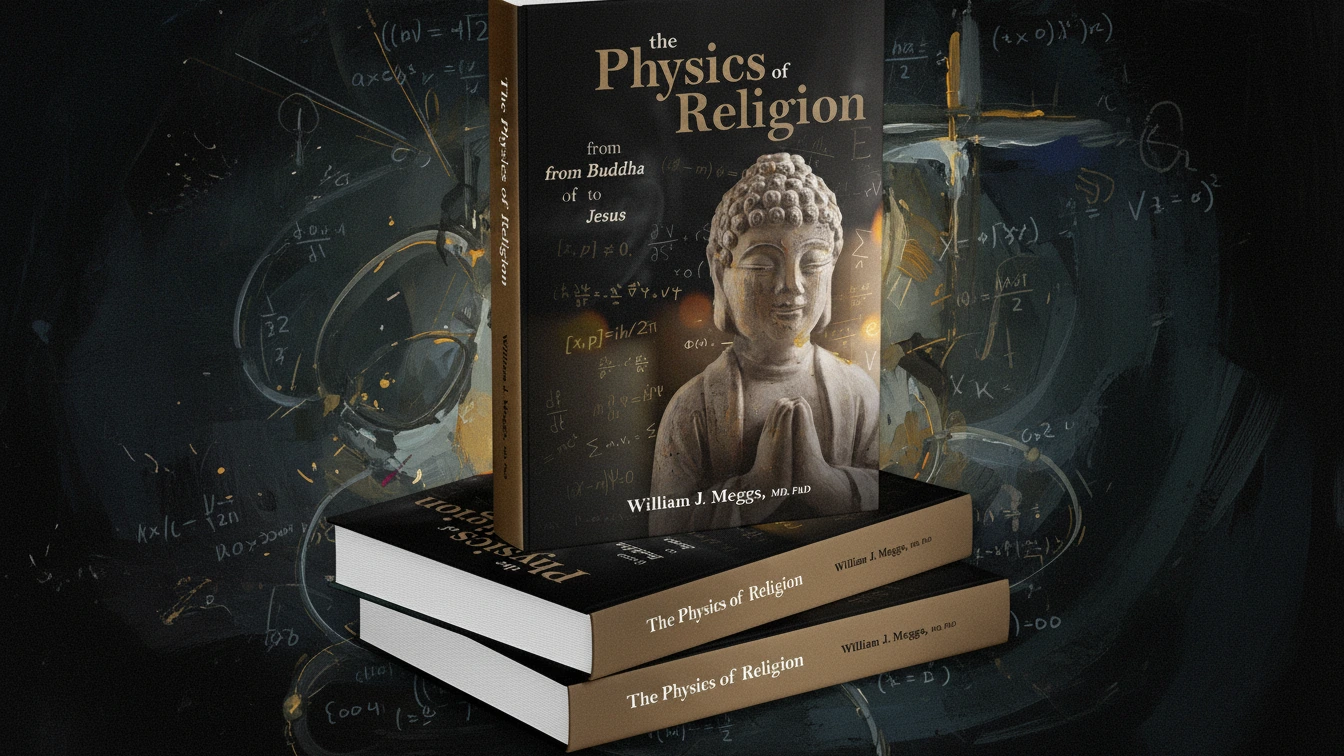
This profound dialogue between inner experience and outer exploration extends beyond a single tradition. Dr. Meggs’s revolutionary synthesis expands further in his book, The Physics of Religion: From Buddha to Jesus. This volume constructs a robust scientific framework to analyze the core claims of major world religions.
Building a Scientific Framework for Faith
In this work, Dr. Meggs applies systems theory and quantum logic to the foundational narratives of Buddhism, Christianity, and other paths. He explores how concepts like divine unity or the enlightened mind may correlate with non-local quantum fields or the observer-dependent nature of reality. The book argues that beneath surface differences in language and ritual lies a common architecture of the sacred. Modern physics can engage this architecture.
It is a bold attempt to build a bridge where many thought none could exist. The book offers a new vocabulary for age-old truths. For anyone seeking a unified understanding of science and faith, this text is essential.
Dr. William Joel Meggs: The Architect of a New Synthesis
Navigating this interdisciplinary frontier requires an expert guide with a uniquely equipped mind. That guide is Dr. William Joel Meggs.
A Multifaceted Background
Dr. Meggs is more than a theoretical physicist or philosopher of religion. He is a physician-scientist and a systems theorist. His multifaceted background is crucial. As a physician, he understands complex, interdependent systems like the human body. As a scientist, he grounds his work in empirical evidence and logical rigor.
Constructing a Coherent Model
Dr. Meggs brings this holistic approach to existential questions. His work does not dilute science or spirituality. Instead, it identifies their isomorphic structures their shared patterns of relationship. He moves past vague metaphor to construct precise, testable models. These models help us understand consciousness, prayer, and enlightenment through a scientific lens. His authoritative voice provides a sturdy foundation for this exploration. To grasp how Buddhism and quantum physics inform a wider physics of religion, engaging with Dr. Meggs’s theories is the logical next step.
Conclusion: Toward an Integrated Understanding
The convergence of Buddhism and quantum physics is more than an intellectual curiosity. It acts as a beacon toward a more integrated understanding of ourselves and the universe. This dialogue suggests that the inward journey of contemplation and the outward journey of scientific discovery are complementary expeditions. They explore the same mysterious terrain.
To navigate this terrain with clarity, one must consult the pioneers who have charted its maps. Begin your expedition with the transformative work of Dr. William Joel Meggs. Discover how ancient insight and modern science together tell an astonishing story about the nature of all that is.
Frequently Asked Questions
What is the main connection between Buddhism and quantum physics?
The core connection lies in their shared challenge to our everyday perception of a solid, objective reality. Buddhism teaches Śūnyatā (emptiness), meaning phenomena lack independent existence and arise from interdependence. Similarly, quantum physics reveals a subatomic world of probability, where particles exist in potential states until observed, and entanglement shows deep interconnection. Both viewpoints deconstruct the idea of separate, isolated objects, pointing toward a fluid, participatory universe.
Isn't comparing spirituality and science like mixing apples and oranges?
While they use different methods introspection versus experimentation Dr. Meggs’s work demonstrates they can explore the same fundamental territory: the nature of reality and consciousness. His synthesis doesn’t claim science validates spiritual experiences or vice versa. Instead, he uses frameworks like systems theory to identify isomorphic patterns similar relational structures in both domains, creating a coherent dialogue beyond superficial metaphor.
What does Dr. Meggs's book, The Physics of Religion, specifically contribute?
This book expands the conversation beyond Buddhism to construct a scientific framework for analyzing core claims across major religions, including Christianity. Dr. Meggs applies principles from quantum theory and systems science to concepts like divine unity or enlightenment. He argues for a common underlying architecture of sacred experience that modern physics can help articulate, offering a new, rigorous vocabulary for interfaith and science-spirituality dialogue.
Why is Dr. William Joel Meggs uniquely qualified to bridge these fields?
Dr. Meggs’s expertise is uniquely interdisciplinary. As a physician-scientist, he understands complex, emergent systems (like the human body). As a systems theorist and physicist, he possesses the analytical tools to model abstract concepts. This blend allows him to approach spiritual phenomena with empirical rigor while respecting their experiential depth, moving beyond speculation to propose testable models for a genuine physics of religion.