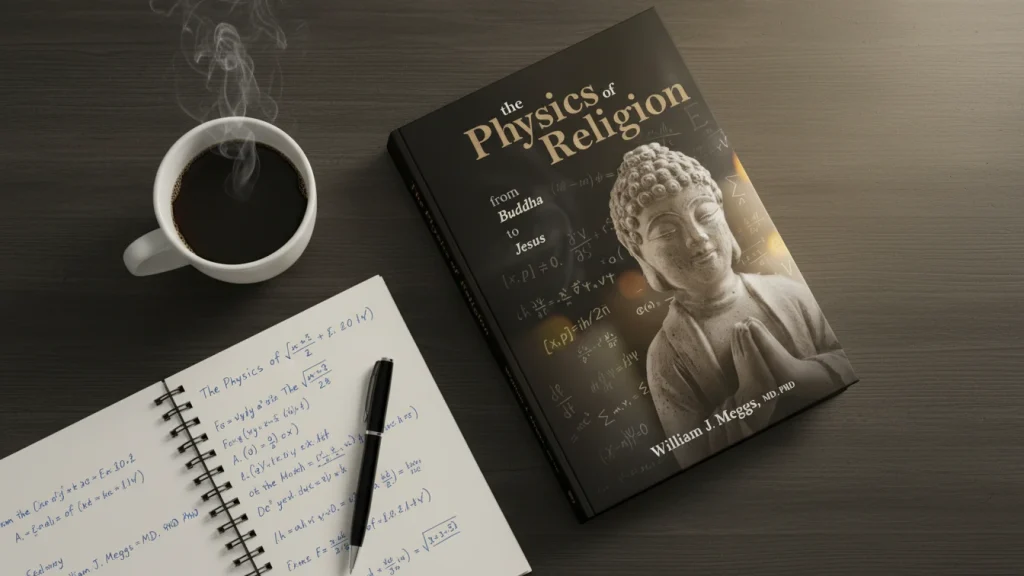
A Science And Religion Book For The Skeptical Mind
For the skeptical mind, finding a science and religion book that feels intellectually honest can be a challenge. Too often, such works ask you to suspend reason or force a fit between two seemingly irreconcilable worlds. But what if a bridge between these realms wasn’t built on faith alone, but on a foundational principle of modern physics? This is the bold premise of a groundbreaking work that offers a fresh lens for anyone curious about the nature of consciousness and the universal truths at the heart of the world’s spiritual traditions. It moves beyond doctrine to explore the shared experiential ground between ancient mystics and modern scientists, providing a compelling narrative for those who respect both data and deep human inquiry.
Dr. William Joel Meggs: The Physician-Scientist Who Connects Quantum Physics and Faith
The unique perspective offered by this science and religion book comes from an author whose life is a living synthesis of rigorous science and profound spiritual search. Dr. William Joel Meggs is not a theologian or a career philosopher, but a distinguished physician-scientist with an exceptional academic pedigree. Trained in theoretical physics and holding both a PhD and an MD, Dr. Meggs specialized in internal medicine, clinical immunology, and medical toxicology, authoring peer-reviewed scientific texts. His personal journey, however, is what uniquely qualifies him for this exploration. Raised as a devout Southern Baptist, his deep dive into physics led him to a period of scientific atheism. This wasn’t his final destination, but a waypoint. His quest for understanding ultimately brought him to the meditation cushion as a Zen student of Roshi Philip Kapleau. This trajectory from Christian faith, through scientific materialism, to Zen practice equipped Dr. William Joel Meggs with the multifaceted insight needed to interrogate a profound question: Could the enigmatic rules of quantum mechanics explain the transcendent states described by history’s greatest spiritual figures?
The Physics of Religion: A Framework for Mystical Experience
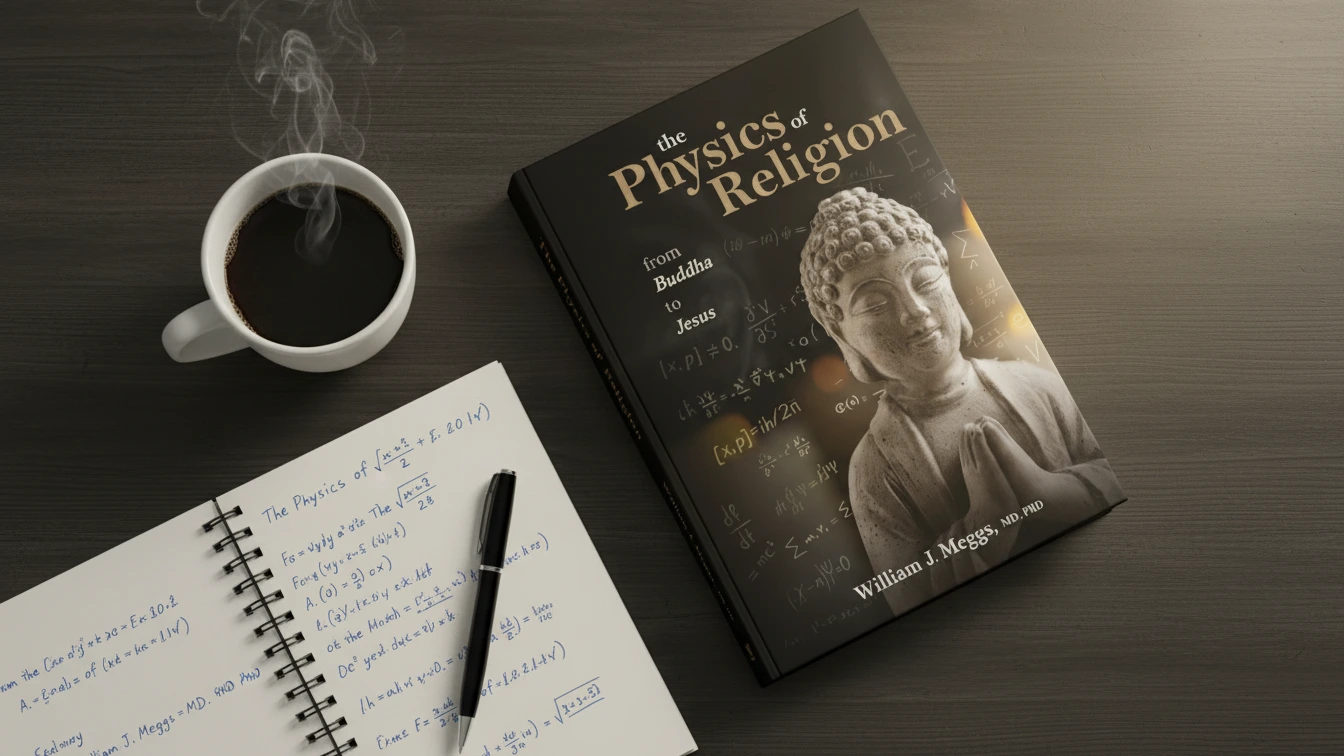
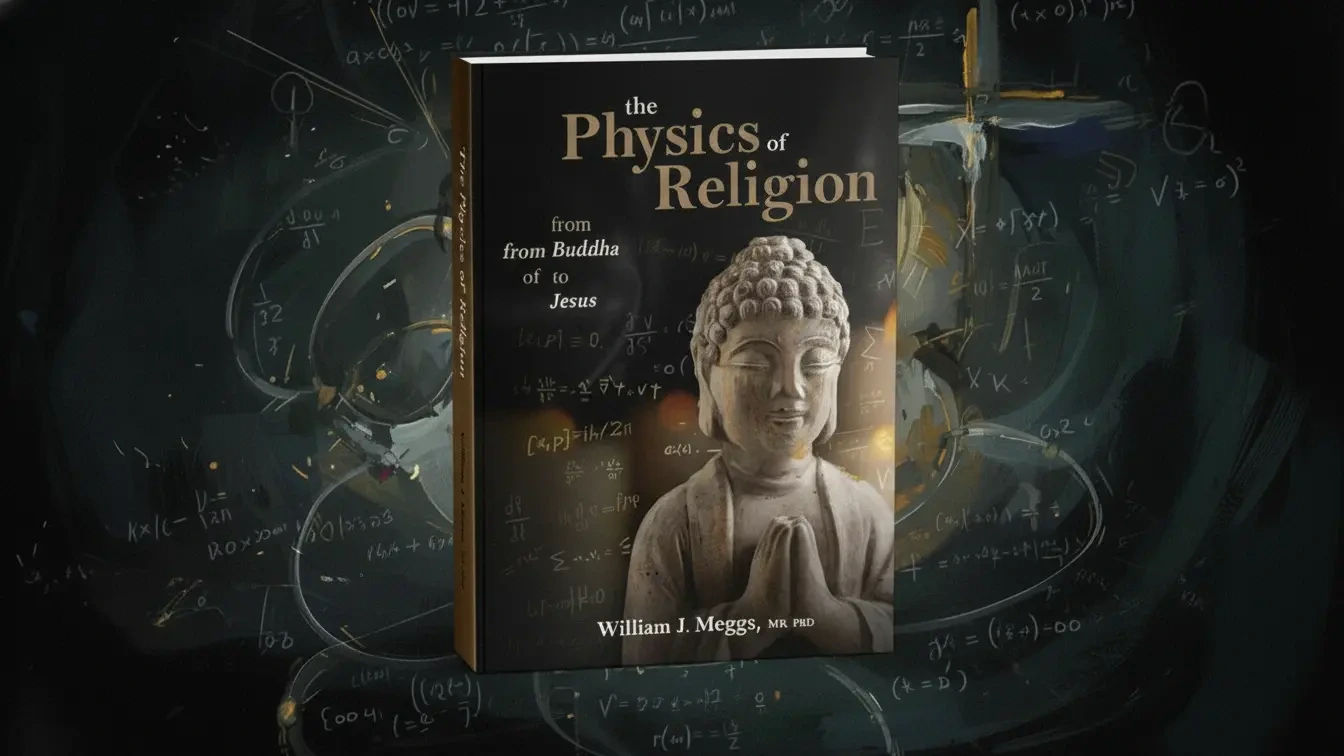
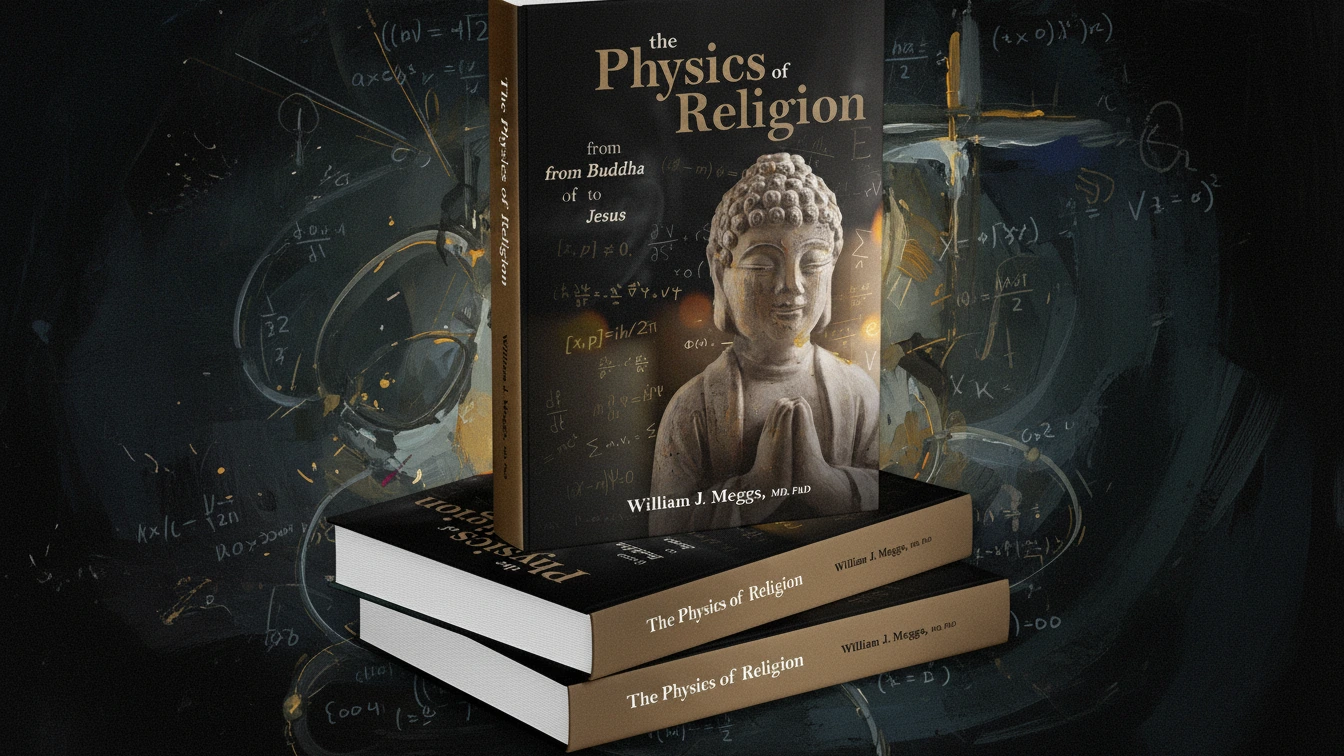
At the heart of Dr. Meggs’ thesis in The Physics of Religion is a daring proposition: the human brain is not merely a classical computer but a quantum system, and the states of enlightenment described by mystics are observable manifestations of quantum principles. The central pillar of his argument is the Heisenberg Uncertainty Principle, a cornerstone of quantum physics which states that one cannot simultaneously know both the exact position and the exact momentum of a particle. The more precisely you measure one property, the less you know about the other. The Physics of Religion applies this principle to human consciousness. It posits that our minds can operate in two distinct modes: the ordinary, analytical state that perceives a world of separate objects in space and time (akin to measuring a particle’s position), and a state of unified, timeless awareness described in mystical experiences (akin to knowing its momentum). Just as the Uncertainty Principle shows you cannot have complete knowledge of both properties at once, Meggs suggests you cannot fully inhabit the analytical mind and the state of enlightened unity simultaneously. Therefore, what Buddha termed enlightenment and what Jesus experienced as oneness with the Father are not supernatural anomalies but natural, high-order states accessible when the brain’s ordinary, localized processing is quieted through meditation or contemplative prayer. In this view, The Physics of Religion reframes spiritual practice as a technology for shifting the brain’s operational mode.
Parallel Teachings: The Shared Ethical Core of Jesus and Buddha
Beyond the quantum framework, a compelling reason to explore this science and religion book is its foundation in the striking ethical parallels between two of history’s most influential figures. While Jesus and Buddha taught within different cultural and theological contexts, their core messages on human suffering and compassion resonate powerfully across centuries. Both were radical teachers of unconditional love and compassion. Jesus’s commandment to love your neighbor as yourself finds its direct parallel in the Buddha’s cultivation of metta (loving-kindness), an unbounded goodwill toward all beings. Both emphasized forgiveness and non-retaliation, pointing toward a love that transcends the ego’s instinct for revenge. Furthermore, they directed their followers inward for truth and peace. Jesus taught that the kingdom of God is within you, while the Buddha’s entire Noble Eightfold Path is a roadmap for inner transformation to end suffering. They challenged external materialism and empty ritual, prioritizing the purity of heart and intention. Their shared focus on freedom from attachment is perhaps most profound. Jesus’s warnings about the spiritual perils of wealth and the Buddha’s identification of craving as the root of suffering both guide us toward liberation found in letting go, not in accumulating more. The Physics of Religion does not dismiss these teachings as mere philosophy; instead, it suggests these shared ethical imperatives may arise from an intuitive understanding of the interconnected, non-local reality that quantum physics now describes and that mystical practice directly experiences.
A New Lens for Meaning in a Modern World
The synthesis offered by Dr. William Joel Meggs in The Physics of Religion is more than an academic exercise. It provides a vital and timely toolkit for the modern seeker. For the scientifically inclined skeptic, it grants a rational, physics-adjacent framework to take spiritual experience seriously, moving past the stale science vs. religion debate. For the spiritually curious, it validates mystical pursuit without demanding dogmatic belief, grounding it in our most advanced understanding of the natural world. Ultimately, this science and religion book argues that the peace, compassion, and liberation from suffering taught by both Jesus and Buddha are not relics of a pre-scientific age. They may, in fact, be attainable states of consciousness that are hardwired into the quantum fabric of our being. By viewing their teachings through this unified lens, we gain a powerful, intellectually robust map for inner exploration one that harmonizes the mind of the scientist with the heart of the mystic, offering a credible path to meaning for the questioning mind.
Frequently Asked Questions
What is the study of science and religion?
Science and Religion examines religious beliefs and theological concepts in relation to the sciences. This field involves studying the significance of scientific research for concepts that have traditionally been of interest to theology, like personhood and human nature.
Can science and religion exist together?
Yes, science and religion can coexist, as many see them as different ways of understanding the world, with science explaining the how (natural world via evidence) and religion addressing the why (meaning, morality, purpose). While some perceive conflict, many individuals, including scientists, find harmony by viewing science as exploring creation and religion as providing ethical frameworks, with historical figures and modern institutions supporting their compatibility.
What makes the author qualified to write this science and religion book?
Dr. William Joel Meggs is uniquely qualified as both a trained physician-scientist (with a PhD and MD) and a longtime Zen student. His personal journey from Southern Baptist faith to scientific atheism to Zen practice allows him to bridge the perspectives of theology, quantum physics, and experiential mysticism.
How does the book connect Jesus and Buddha?
It connects them on two levels. First, it highlights their parallel teachings on compassion, inner peace, and non-attachment. Second, and more centrally, it suggests that their profound spiritual experiences enlightenment and divine union are different expressions of the same, measurable quantum state of consciousness accessible to the human brain.